


The future education estate of the Isle of Wight

Unlocking the potential of the existing school estate during national opportunity
A practical framework for supporting educational success, environmental stewards
This independent discussion paper proposes a practical framework through which the Isle of Wight Council, maintained schools and local partners could assess the readiness of the existing education estate to support future educational, inclusion, sustainability and community priorities.

Executive Summary
The Isle of Wight’s education estate is entering a period of significant change. Demographic pressure, surplus capacity within parts of the primary estate, increasing demand for SEND and SEMH provision, financial constraints, climate-resilience ambitions and wider community needs are placing greater demands on school buildings and the way they are planned, managed and funded.
Simultaneously, the Department for Education’s Education Estates Strategy and School Estate Management Standards establish a clearer national direction. Schools, responsible bodies and local authorities are increasingly expected to understand their assets, maintain reliable estate data, plan strategically and demonstrate how investment supports educational priorities.
This creates a timely opportunity for the Isle of Wight.
The Island already holds a substantial network of educational assets across its communities. Classrooms, halls, specialist rooms, offices, outdoor areas and shared facilities may offer further potential for SEND and SEMH provision, family support, community services, improved accessibility, sustainability measures and more effective use.
This paper proposes Estate Readiness as a practical framework for understanding that potential.
Estate Readiness considers six connected areas:
Educational Readiness – support for teaching, learning and future curriculum priorities.
Inclusion Readiness – capacity to support SEND, SEMH and accessible provision.
Community Readiness – opportunities for shared services and wider community use.
Sustainability Readiness – energy performance, climate resilience and operational efficiency.
Data Readiness – the quality of condition, compliance, utilisation, cost and asset information.
Strategic Readiness – alignment between estate planning, educational priorities and financial planning.
The framework builds upon existing statutory, compliance and maintenance responsibilities. It adds a strategic lens by connecting buildings and spaces more directly to future educational, inclusion, sustainability and community outcomes.
A practical next step would be a small-scale Estate Readiness Pilot involving a representative group of maintained schools, such as a small primary, a larger primary, a secondary school and a school with identified SEND, SEMH or inclusion opportunities.
Each participating school would receive a concise readiness profile identifying strengths, risks, information gaps, opportunities and recommended next steps. The Council would receive an aggregated strategic overview showing common themes, emerging pressures and areas requiring further investigation.
The pilot would support:
school-place and SEND planning;
maintenance and capital prioritisation;
sustainability planning;
improved estate data;
stronger funding and investment cases;
better coordination across schools and the Council.
Proposed next decision
The Isle of Wight Council should convene an initial Education Estate Readiness discussion with maintained schools and relevant partners to agree the scope, governance, assessment criteria and participating schools for a pilot.
This would provide the Island with a clearer, coordinated evidence base and strengthen its ability to secure future investment, respond to national expectations and make better use of the education assets already serving its communities.
Foreword
Walk into almost any school on the Isle of Wight and you are likely to hear familiar conversations: a headteacher discussing increasing SEND and SEMH needs; a business manager reviewing rising costs; a governor considering long-term sustainability; a site manager working to keep buildings safe, warm and operational; or a family seeking familiar support closer to home.
Different conversations. One shared estate.
Schools are among the most familiar public assets in any community. The Department for Education describes the education estate as a platform for opportunity, learning and community, with schools and colleges sitting at the heart of the places they serve. (Department for Education, 2026, p. 5).
Over the last 20 years, I have worked within education estates, and one observation continues to stand out: some of the most valuable educational assets are already present within the buildings and spaces we use every day. A classroom can become more than a classroom. An underused area can become a place for targeted support. A familiar school site can become a trusted location for wider community services.
I have seen this happen repeatedly. I have seen schools create specialist provision within existing accommodation. I have seen estates unlock opportunities that had remained unnoticed for years. I have also seen how quickly estate pressures can reach the centre of school life.
Several years ago, I supported an independent school facing significant scrutiny of its health, safety and estate-management arrangements. Over nine months, records were reviewed, systems rebuilt, risks addressed and operational confidence restored. Ofsted subsequently returned, and the experience reinforced a principle that has shaped my work ever since: educational success and estate performance travel together.
A rare combination of circumstances
The Council’s published evidence already identifies the principal ingredients:
Changing demographics.
Increasing surplus capacity within the primary estate.
Pressure to expand local SEND and SEMH provision.
Financial pressure associated with under-occupied schools.
Community wellbeing priorities.
Sustainability and climate-resilience ambitions.
The Council’s 2025–26 Childcare Sufficiency Assessment reports that a further school-place-planning review is under consideration and identifies the potential for 3,056 unfilled primary places by September 2027 (Isle of Wight Council, 2026a, p. 8). The Council also recognises that surplus capacity can increase the risk of inefficient operation and financial deficits within maintained schools (Isle of Wight Council, n.d.).
At the same time, the Area SEND Improvement Plan identifies the need to expand local specialist resource provision, develop further specialist places and establish new provision for children and young people with social, emotional and mental health needs (Isle of Wight Council, 2025a, p. 33).
The Island also has clearly stated environmental ambitions. The Council’s refreshed climate strategy retains targets of net-zero emissions from Council services by 2030, across schools by 2035 and across the Island by 2040 (Isle of Wight Council, 2025b, p. 14).
This combination creates possibility.
Surplus capacity can be viewed through a constructive lens:
Available space.
Adaptable space.
Strategic space.
Accessible space.
That does not mean that every unfilled school place represents space that can immediately be repurposed. Future sufficiency, patterns of housing growth, educational need, land constraints, operating costs and the ability to reverse or adapt changes must all be considered.
The Education Estates Strategy recognises this balance.
It proposes a national decision-making framework for surplus mainstream-school space that considers both the opportunities created by available space and the long-term risks arising from demographic change (Department for Education, 2026, p. 17).
Across the Island, there are buildings, rooms, halls, offices, outdoor areas and specialist spaces already serving communities every day. Some may hold additional value for education, inclusion and wider community support. Others may provide opportunities to improve utilisation, operating efficiency or shared use, subject to educational need, safeguarding, governance, property rights and feasibility.
Surplus student capacity is a planning indicator.
Estate opportunity must be established through assessment of actual estate accommodation, educational need, configuration, condition, operating cost, accessibility and long-term adaptability.
the direction of travel is already clear
The Department for Education’s Education Estates Strategy defines the ambition as an education estate that is:
Safe — structurally safe and compliant with health and safety requirements.
Suitable — flexible, inclusive and capable of supporting changing educational and community needs.
Sustainable — designed and managed with nature, climate resilience and net-zero ambitions in mind.
Sufficiently sized — able to provide the right amount and type of space from early years through to post-16 education (Department for Education, 2026, pp. 13–14).
This provides a clear foundation for every school, responsible body and local authority.
Safe buildings support confident leadership.
Suitable buildings support inclusive and effective education.
Sustainable buildings support long-term environmental and operational resilience.
A sufficiently sized estate supports pupils, families and communities as needs change.
The School Estate Management Standards add a structured progression framework.
Level 1 is the baseline starting point; Level 2 represents transition towards stronger practice; Level 3 is the fully effective position that schools should work towards; Level 4 represents advanced practice where this supports an organisation’s strategic aims (Department for Education, 2025, pp. 4–6).
At baseline level, schools and responsible bodies should have appropriate governance arrangements, an estate strategy, an asset management plan, current condition information and core estate data. They should understand whether buildings are fit for purpose and whether the estate provides the right amount of space for the number of school places (Department for Education, 2025, pp. 7–8).
As organisations progress, they are expected to assess how effectively their buildings are being used, use condition and performance information to inform priorities, undertake regular strategic reviews and integrate sustainability and climate resilience into estate planning (Department for Education, 2025, pp. 12–14).
The Council’s plans for school-place planning, local SEND provision, community wellbeing and climate adaptation sit naturally alongside this national direction. Together, these documents encourage:
A longer-term view.
A stronger understanding of assets.
Informed and transparent decision-making.
Closer alignment between physical environments and educational priorities.
The foundations are already in place.
The question worth exploring
A useful next step would be to examine educational assets across the Isle of Wight through a single practical lens:
Estate Readiness.
Estate Readiness is proposed here as an interpretive framework. It is not a formal Department for Education standard. It provides a way of bringing together the national requirements for condition, sufficiency, suitability, sustainability, data and strategic management and applying them to the Island’s local priorities.
The questions are straightforward:
How ready is the estate to support future SEND and SEMH needs?
How ready is it to support community services?
How ready is it to respond to future educational priorities?
How ready is it to support sustainability and climate-resilience ambitions?
How ready is it to withstand financial, operational and demographic pressures?
Condition, compliance and maintenance provide the essential operational base. Estate Readiness adds an additional strategic lens.
In my experience, organisations gain greater value from their estates when they move beyond asking only whether a building is operational and begin asking how well it is positioned to support future objectives.
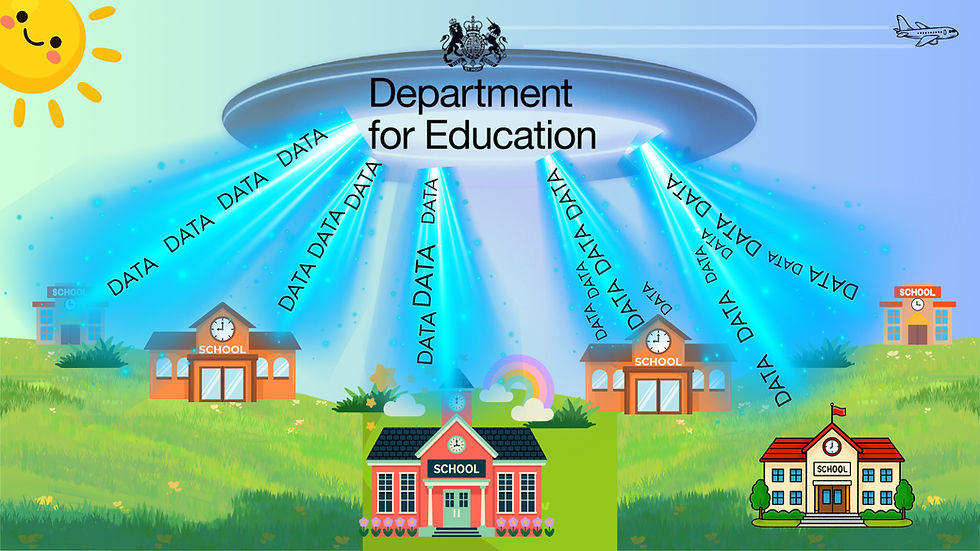
The Education Estates Strategy similarly emphasises the role of reliable data and digital capability in developing a shared understanding of buildings, identifying necessary interventions and acting at the right point in the building lifecycle (Department for Education, 2026, pp. 16–18).
An evidence-informed and targeted approach can support more effective use of resources, strengthen investment decisions and reduce avoidable disruption to education.
What high-performing estates tend to have in common
Over the years, I have visited schools facing very different circumstances.
Some had substantial budgets.
Others operated under significant financial constraints.
Some occupied modern facilities.
Others worked within ageing, system-built SCOLA and CLASP estates.
A common pattern emerged.
In my experience, the most effective organisations understood their assets exceptionally well.
They knew:
What they had.
What condition it was in.
How it was being used.
Where risks and opportunities existed.
Where future pressures were likely to emerge.
This mirrors the principles contained within the School Estate Management Standards, which require schools and responsible bodies to maintain core estate data, understand condition and cost, assess fitness for purpose and sufficiency, and use evidence to inform asset-management planning and prioritisation (Department for Education, 2025, pp. 7–8 and 12).
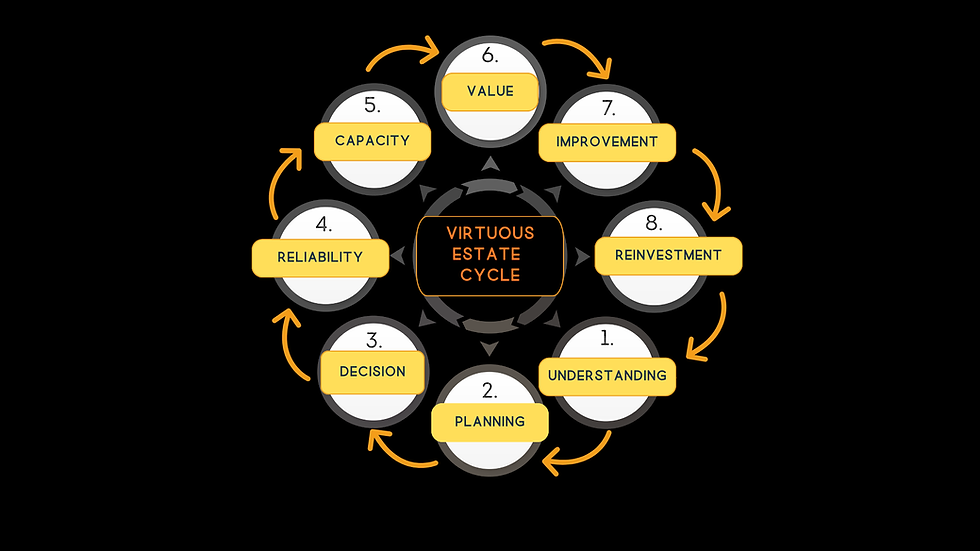
Good decisions follow good understanding.
Investment should follow good decisions.
Outcomes improve when all three work together, harmoniously.
Estate maturity through a readiness lens
The proposed Estate Readiness framework brings these ideas together across six areas.
Educational Readiness
How effectively does the estate support teaching and learning today, and how capable is it of supporting future curriculum and organisational priorities?
Inclusion Readiness
How effectively does the estate support SEND, SEMH and alternative provision, taking account of both current and projected needs?
Community Readiness
How effectively does the estate contribute to wider public and community value, including appropriate opportunities for shared services, family support and community use?
Sustainability Readiness
How effectively does the estate support long-term environmental performance, climate adaptation, energy efficiency and operational resilience?
Data Readiness
How confidently can leaders make decisions using the condition, compliance, utilisation, sufficiency, cost and performance information available to them?
Strategic Readiness
How closely are estate planning, educational priorities, financial planning and the Island’s longer-term ambitions aligned?
Taken together, these areas create a picture of how effectively the estate is positioned to support future priorities. The framework does not replace condition surveys, compliance management, maintenance planning or statutory responsibilities. Those remain the essential baseline.
It strengthens existing estate management by connecting buildings and spaces more explicitly to educational outcomes, inclusion, sustainability and community value.
A practical next step
The Isle of Wight already possesses many of the ingredients needed to explore this approach further:
Established school communities.
Committed leaders and governors.
Clearly identified strategic pressures.
A defined and geographically contained estate.
Published education, SEND, place-planning and environmental priorities.
A practical next step would be a small-scale Estate Readiness Pilot involving a representative sample of local-authority-maintained schools.
The purpose would be simple:
To understand current strengths.
To identify risks and information gaps.
To identify opportunities for future use.
To provide evidence for informed decision-making.
To create a clearer picture of estate readiness across the Island.
Subject to agreed governance and data-sharing arrangements, school-level findings would remain with participating organisations. The Council could receive an aggregated strategic overview identifying common themes, emerging risks and potential areas for future consideration.
The learning could inform future place planning, SEND development, maintenance priorities, sustainability planning and investment business cases.
Most importantly, the process would provide a clearer understanding of how existing educational assets could support ambitions already set out within the Council’s plans.
Proposed Estate Readiness Pilot
The pilot could review a small number of maintained schools operating in different contexts.
For example:
One small primary school.
One larger primary school.
One secondary school.
One school with identified SEND, SEMH or inclusion-adaptation opportunities.
Each review could consider:
Current estate use and utilisation.
Condition, compliance and maintenance information.
Surplus or adaptable accommodation.
SEND, SEMH and inclusion potential.
Accessibility.
Community/lettings use and co-location potential.
Sustainability and climate-resilience considerations.
Potential for appropriate asset sharing.
Quality and completeness of estate data.
Alignment with Council and school priorities.
Property, planning, safeguarding and operational constraints.
Each participating school would receive a concise readiness profile setting out strengths, risks, opportunities and suggested next steps.
The Council would receive a strategic overview showing common themes, emerging opportunities, information gaps and areas requiring further investigation.
This would create a practical evidence base for future planning and help strengthen the prioritisation of investment.
Proposed Estate Readiness Pilot
Element | Suggested clarification |
Duration | 2-3 days per estate |
School engagement | Interviews, site review and document review |
Evidence | Core estate data, condition information, PPM, compliance, utilisation and strategic plans |
Assessment | Defined maturity or confidence scale |
Outputs | Individual profiles, aggregated findings and recommendations |
Governance | Data-sharing, confidentiality and ownership |
Limitations | Pilot findings guide further investigation rather than replacing technical surveys |
Success measures | Better data, identified opportunities, prioritised actions and investment evidence |
Closing reflection
Every quality leader understands the value of preparation.
The best outcomes emerge from understanding, planning and consistent action over time. The same principle applies to educational estates.
The Isle of Wight already possesses an education estate with a presence across communities throughout the Island. The buildings are here. The ambition is here. The strategic direction is here. A deeper understanding of Estate Readiness would help bring these elements together and provide a stronger foundation for the decisions that follow.
I strongly believe that the Island has an opportunity to examine the education estate it already holds and ask what more it could achieve for pupils, families and communities.
A timely conversation
The Education Estates Strategy establishes a ten-year national direction for renewal, supported by £38 billion of education capital between 2025–26 and 2029–30 (DfE, 2026, p. 6).
The funding set out in the Education Estates Strategy is national and programme-specific; it is not distributed through a fixed percentage allocation automatically ring-fenced for the Isle of Wight. Although the Island may receive funding through particular programmes or formula-based allocations, access to much of the available investment will depend on clearly demonstrating need, strategic alignment, deliverability and value for money.
The Island will therefore be better placed to secure funding if its estate information is accurate, its priorities are coordinated and its proposals are supported by robust evidence. Without this organisation and readiness, genuine local need may be less visible or less compelling when assessed alongside competing priorities elsewhere on the mainland.
From autumn 2026, responsible bodies will also be asked to make an annual return on how they are meeting the School Estate Management Standards. This should provide greater clarity about the Department for Education’s expectations and the future direction of estate data, assurance and funding decisions (Department for Education, 2026, p. 6).
Schools across the Island should not wait for that return before acting. They need to begin strengthening their estate data, governance, plans and evidence now, so they are ready when information is required to justify future investment.
This is a once-in-a-generation opportunity for the Isle of Wight to do what it does best:
work collectively across schools, the Council and local communities. By pulling together, sharing evidence and agreeing clear priorities, the Island can make the strongest possible case for the resources needed to improve its education estates and enhance the community assets that students, families and taxpayers collectively depend upon.
References
Department for Education (2025) School estate management standards: Policies and processes required to manage the school estate effectively. London: Department for Education. Available via the GOV.UK School Estate Management Standards publication page.
Department for Education (2026) Education Estates Strategy: A decade of national renewal. CP 1501. London: Department for Education. Available via the GOV.UK Education Estates Strategy publication page.
Isle of Wight Council (2025a) Area SEND Improvement Plan V4 – Final. Newport: Isle of Wight Council. Available via the Isle of Wight Council website.
Isle of Wight Council (2025b) Environmental Improvement and Climate Adaptation Strategy 2021–2040: Refresh and Review 2025. Newport: Isle of Wight Council. Available via the Isle of Wight Council website.
Isle of Wight Council (2026a) Isle of Wight Childcare Sufficiency Assessment 2025–2026. Newport: Isle of Wight Council. Available via the Isle of Wight Council website.
Isle of Wight Council (n.d.) School place planning. Isle of Wight Council website. Accessed 23rd June 2026.

Comments