


Estates Literacy? Schools easily waste £30,000 on their estate per year without even approving a £30,000 project…

A bad winter can see £4,000 on repeated emergency heating issue call-outs.
A wet autumn and another £6,500 patching a roof that if we are honest… we know in an ideal world already needs replacing..
£3,000 a year on repeated termly fire door repairs to stay compliant.
£5,500 on “temporary measures”.
£3,000 on recurring emergency contractor premiums that covertly stack up. Please
£3,000 on access equipment hired more than once for similar or the same job.
£5,000 worth of in house management time, disruption and duplicated effort spread out across the year.
No Trustee paperwork signed off after asking for approval.
Just a series of reasonable decisions made one at a time.
And that, is one of the strangest things about school estates.
Large amounts of money can disappear fairly quickly without any sort of fanfare..
And because each individual decision often looks logical and sensible at the time, the pattern only really becomes visible once somebody (else, usually) stands far enough back to see it. Taking the divergent perspective…
This is where I think one of the most important ideas in school estates is birthed.
A dependable, organised estate does far more than keep the grounds and buildings working. It creates the conditions for more effective, better decisions, and better decisions compound.
The school beneath the school
I am not referring to the weird often mushroom adorned plant room basements in some SCOLA and CLASP buildings… wherein, pressure challenged estates teams have been secreting away old broken kit..
I mean conceptually.
Arguably, there are really two schools operating on most sites.
The first is the one everybody sees.
Teaching.
Learning.
Students.
Open Evenings.
Staff.
Curriculum.
Sport.
Drama Performances.
Prom.
Results days.
So on, so forth…
The second sits underneath (and over) it, relatively unnoticed..
Heating (& cooling)
Electrical systems.
Water.
Roofs.
Fire precautions.
Doors.
Drainage.
Security.
Ventilation.
Cleaning.
Compliance.
Maintenance.
Grounds.
Plant equipment.
That second school covertly makes the first one, the overt, possible.
When this synergy works well, people barely notice it. Which creates an interesting behavioural problem, because we naturally value what we can see.
A refurbished classroom looks like investment. New gates, clearly look a worthy investment. A new reception - looks like investment. New furniture, definitely an investment. If it is tangible we can perceive and value the investment.
On the other hand…
A properly structured planned maintenance programme looks like a cluttered, ugly spreadsheet.
A new pump sits in a plant room seen by only a few lucky individuals..
A drainage repair disappears underground. A five-year lifecycle plan exists inside a document few people will ever read from beginning to end - because in reality - it is fairly dull.
Yet, those concealed investments can release far more value over time if handled correctly. A £16,000 roof intervention that prevents £60,000 of reactive expenditure over the following few years is a very good investment. It just makes a terrible photograph or FB post on the school account…
The estate often telegraphs what is coming next..
Most large plant equipment failures arrive with a history. A boiler rarely wakes up one morning and decides it has had enough. There are usually some fairly decent clues the break down is impending... We don’t have to be Inspector Clouseau to figure them out;
Age.
Condition.
Increasing breakdown/fault frequency.
Parts becoming harder to source.
Energy performance dropping.
Controls becoming unreliable.
Maintenance costs creeping upwards.
The same applies to roofs, doors, drainage, lighting, windows, electrical systems and almost every other estate asset I can't be bothered to list right now.
The information is usually there. It hides itself within invoices;
Helpdesk tickets.
Contractor reports.
Inspection sheets.
Asset registers.
Condition surveys.
Compliance records.
Certificates
Rust on pipes
Stains in ceiling tiles
Blown concrete
Lifted block paving
Warped tarmac
Etc.. etc..
And, frequently, inside the head of the person who has spent the last fifteen years walking around the site.
Our primary opportunity comes from joining those things together. Because once individual issues and jobs become patterns, the estate begins to inform you what comes next. It is really not rocket science.
We become habituated fairly easily as humans, and when we walk down the corridor and no longer notice the stain on the ceiling tile, it's not deliberate - we aren’t being ignorant, we have just become habituated to our environment.
Familiarity is one of the brain’s great efficiency tricks: what we see every day gradually becomes what we cease to see, to save processing power. This can be where often, next year's £30k break downs lurk, in those liminal spaces.
Conundrum: How do we see what we can't see?
We need to look in a different way, change our perspective.
This concept changes our questioning..
Reactive estate management tends to revolve around:
What needs fixing today?
Strategic estate management asks: What is likely to need attention next?
These are very different questions. And if we hold this perspective change - we shift the estate to a new pathway…
We begin looking ahead…
One year. Three years. Five years.
You start matching asset condition with budgets.
You identify liabilities while choices still exists.
You group work together.
You schedule around teaching.
You procure properly.
You consider energy efficiency.
You understand where compliance gaps are genuine physical risks and where they are evidence or process gaps.
You begin to control the timing of actions on the estate..
And timing has enormous financial value.
A failed boiler in January gives you very few choices.
Pay out, lose education hours, staff time and of course…money.. £.
Knowing in September that the boiler is approaching the end of its lifecycle or useful life gives you many choices.
You can plan, tender if needs be - heck - you can specify properly what you need.
Explore funding, co-ordinate required asbestos works. You can even have the luxury of time to plan clearly enough to bundle the project with controls or distribution improvements. Schedule it for a holiday whilst you have space to consider the wider heating strategy.
The difference between those two situations is timely information.
It gives us Estates decision control. This is a hint of one the elements of Predictive maintenance. Brought to life using Estate literacy..
The virtuous estate cycle
And thusly, is where the whole thing begins to compound.
Better Estate Literacy leads to better information which creates better decisions.
Better decisions create better planning. Better planning reduces reactive expenditure.
Reduced reactive expenditure creates financial and operational headroom for us to operate within.
That temporal and fiscal headroom allows more money to move towards estate and education improvement. Improvement increases reliability. Reliability reduces disruption.
Less disruption creates better environments. Better environments support learning, inclusion, staff experience and community use. Better spaces can also generate income.
That value gives the school more capacity to reinvest.
...Then the cycle starts again... compounding on the last layer.. up and up...
Understanding → Planning → Decision → Reliability → Capacity → Improvement → Value → Reinvestment
That is what I refer to as;
the virtuous estate cycle.

Once a school gets into it, each improvement makes the next decision easier and the operational headroom compound.
The estate gradually becomes easier to manage because fewer decisions arrive as emergencies and therefore costly disruption.
If you can read the information well, you are Estate literate.
Schools already understand this...
in other departmental operations
Schools as we all know are built around information.
Attendance data helps identify patterns.
Progress data helps target interventions.
Financial forecasts help leadership see future cost pressures.
Safeguarding records help individual concerns form a clearer picture.
The estate works very much in the same way.
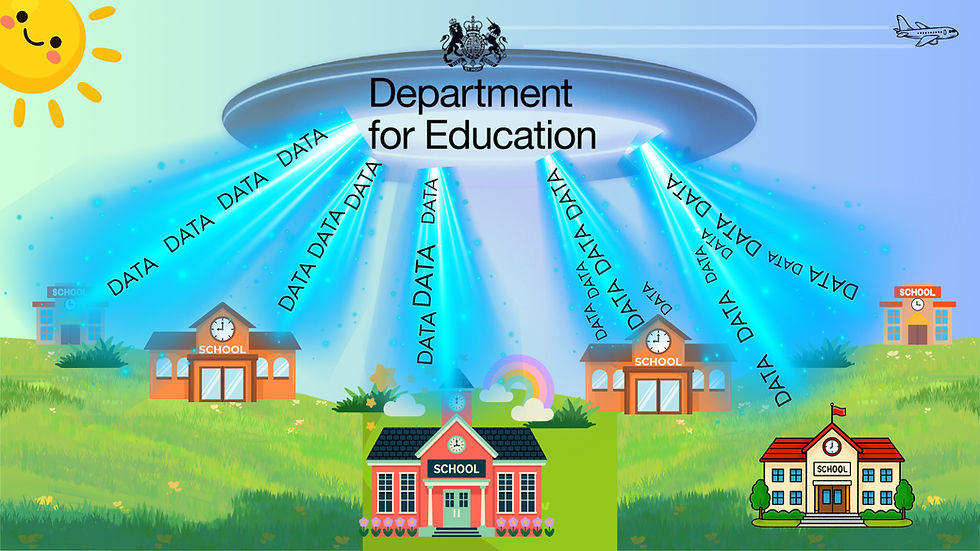
A repair is data. A leak is data. A failed component is data. A contractor recommendation is data. Repeated vandalism is data. A room overheating every June/July is data.
Three call-outs on the same piece of plant are data. Each event tells you something of value.
The real value to us appears when the information is properly viewed together.
One isolated £700 repair may be perfectly reasonable… Five £700 repairs on the same asset tell you a story, which we know the likely ending... the question is - do we take earlier action or wait to become reactive...
Why do so many schools remain reactive?
The answer is not extraordinary. Perception & Time.
School estate teams are busy running school estates.
They are unlocking buildings. Responding to tickets. Managing contractors. Moving furniture. Setting up events. Completing statutory checks. Supporting lettings.
Fixing faults. Dealing with emergencies. Looking after grounds. Working through PPM.
Then, somewhere in the middle of all that, they are expected to build a five-year strategic estate plan.
It is rather like asking the person rowing the boat to redesign the hull halfway across the Solent, when the tide is changing, a force 8 is blowing and half the team are bailing out seawater.
The Team may know exactly what would improve it. Their immediate priority remains getting everyone to the other side, safely. That distinction is important to our proper understanding.
Most reactive school estates are full of somewhat capable people working extremely hard.
Most estates just have more demand than strategic capacity. Therefore, the strategy never gets implemented that can break the reactive cycle.
And so the entropy continues.
And so does the cost, the grind and the inefficient use of resources.
Experience (+ Estate Literacy) = compressed time..
This is where an experienced outside pair of eyes can create the disproportionate value we need to break the reactive cycle.
Someone who has spent decades managing estates tends to see patterns quickly.
Repeated fire door damage can point towards specification, traffic flow, behaviour or supervision challenges. A compliance issue may really be a documentation issue.
A series of small heating repairs may reveal a lifecycle problem. A tired school hall may also be an underused revenue asset that stopped paying for itself.
Several separate capital requests may make far more financial sense as one
co-ordinated programme. (There are thousands of these).
A maintenance budget may look healthy until it is plotted against the age profile of the estate… the older they are the harder they demand…
Perspective & Experience shortens the distance between information and understanding.
And that can rapidly improve the quality of information for leadership decisions.
The useful output is definitely not another 38 page report that won't get read.
Useful output to time stretched leaders is concise clarity.
What needs doing first?
What can wait?
What is coming next?
Where is money being lost?
Where are liabilities building?
Which projects/issues could/should be grouped together?
Which decisions will save money later?
What should this estate look like in five years?
Those are the virtuous cycle leadership questions required to inform decisions, which in turn is control.
The estate itself as an educational asset..
I think this perspective is still underused as an idea in schools.
The estate often gets treated as the place where education happens.
It is more useful to see it as part of how education happens.
Temperature affects the capacity to concentrate.
Acoustics affect listening and learning.
Lighting affects comfort and concentration.
Movement and design around a site affects behaviour.
Accessible environments affect inclusion.
Reliable classrooms protect teaching time.
Good community spaces can create revenue.
Efficient plant can release money for other priorities.
Well-managed environments influence how students and staff feel about the place which improves attendance and retention.
Buildings communicate.
A cared-for school tells people that the organisation pays attention.
A dependable school estate also frees leadership attention for core action.
Fewer emergencies. Fewer unexpected decisions. More predictable spending.
More strategic choice. More time spent on improvement. That is a significant educational benefit, even though it rarely appears in anyone's prospectus.
There is a compounding effect here..
Imagine two identical schools.
Same Student numbers.
Same funding.
Same age of buildings.
Same staffing.
School A responds very efficiently whenever something goes wrong.
School B also responds efficiently, while building asset information, lifecycle plans and one-, three- and five-year priorities.
Year one may look fairly similar.
Year five can look completely different.
School B has timed projects better, bundled work and avoided repeat failures.
Therefore, protected teaching time. They used better procurement windows, created more predictable budgets and as a result; improved spaces, reduced liabilities and increased lettings income.
The two schools started with the same estate.
One school read the Estate and made more decisions while choices were still available.
That is the compounding value of good estate management.
"Personify your estate? Are you mad??" A useful technique for every school..
Imagine your estate could sit down with your leadership team tomorrow morning.
What would the estate itself say?
Which assets are nearing the end of their useful life?
Where is money repeatedly being spent?
Which of your liabilities are growing?
Which compliance areas need strengthening?
Which spaces could work harder?
Which projects could be combined?
Where could investment now reduce future expenditure?
What will the estate require over the next one, three and five years?
And perhaps most importantly of all;
Which decisions can you make now, whilst you still have plenty of options?
That is where a dependable estate begins. To beat the drum one more time...
Know what you have.
Know its condition.
Know its liabilities.
Know its opportunities.
Know what comes next.
From there, the direction changes, reactive spend reduces, disruption reduces.
Planning improves and the estate becomes more reliable.
The learning environment improves. Site and Leadership Teams gain better information.
Investment becomes more reasoned and deliberate.
And the money that once disappeared into waste and recovery begins to fund progress.
Momentum builds..
That is the virtuous Estate cycle.
A dependable estate creates better decisions.
Better decisions create a stronger estate.
And a stronger estate gives the school more capacity to improve everything else.
Estate Literacy?
Most schools have more estate information than they possibly realise. The advantage?
Is in being able to read it.
...But, there is a curious asymmetry in school leadership.
We expect leaders to be financially literate. We expect them to understand attendance data, safeguarding information, curriculum performance and staffing. Yet one of the organisations' largest, most expensive and longest-lived assets can remain comparatively difficult to read:
the estate...
A school can occupy tens of millions of pounds' worth of buildings, spend hundreds of thousands maintaining and operating them, depend upon them for every day of education - and still have surprisingly limited visibility of what those buildings are likely to require next.
I think we need a term for the capability that closes that gap.
I call it Estate Literacy.
What is Estate Literacy?
As a student of philosophy, I have a penchant for definitions. So here goes;
Estate Literacy;
is the organisational ability to understand the condition, performance, liabilities, costs and opportunities within an estate sufficiently well to make informed decisions about its future.
In basic terms, it goes beyond knowing that a roof leaks, a boiler is old or a door needs repairing. A genuinely estate-literate organisation understands what those individual facts mean when considered together.
It can answer questions such as:
What do we own and operate?
What condition is it in?
How reliably is it performing?
Where are costs recurring?
Where are liabilities developing?
Which assets are approaching significant intervention?
How is the estate affecting education, inclusion, operations and revenue?
What will probably require investment over the next one, three and five years?
And critically:
Which decisions could we make today while we still have choices?
That final question is perhaps the most valuable. I say this because I believe that good information has a peculiar economic property in estate management: its value increases when you receive it early enough to act upon it.
A school with credible answers possesses something considerably more valuable than a maintenance list.
It has Estate Literacy.
Estate Literacy creates better information and better decisions.
Better decisions increase Estate Decision Control.
Sustained Estate Decision Control creates the conditions for a Virtuous Estate Cycle.
And perhaps, that gives us a better definition of a strategically managed school estate:
An educational asset that progressively gives its organisation more choices, rather than fewer.


Comments